パレットナイフの街 / 2026
静かな水に、金閣
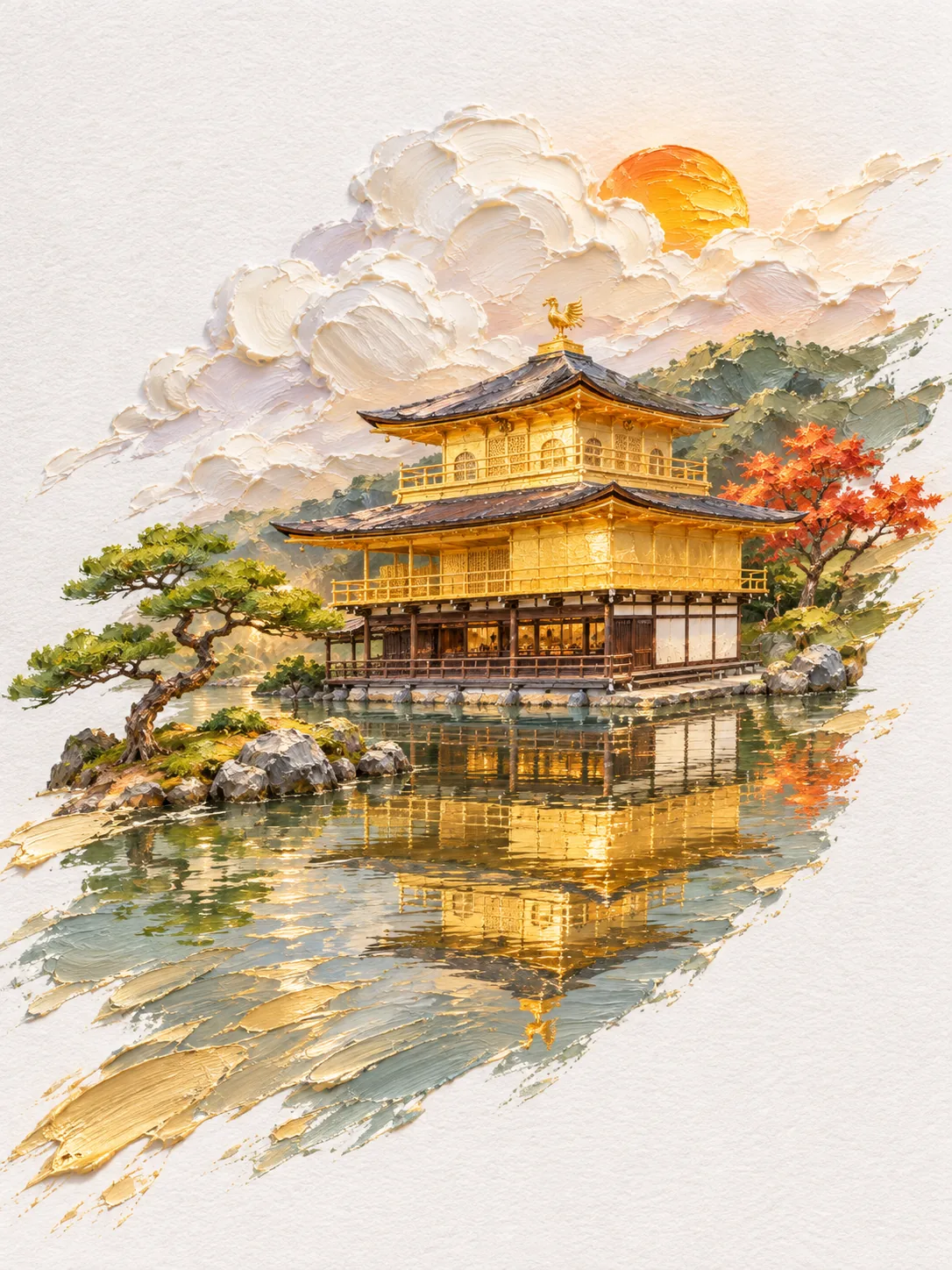
パレットナイフで塗り重ねた京都の金閣寺。金色の絵具のひと筋がそれを支え、池は建物の姿をそのまま映し、厚く盛ったクリーム色の雲から太陽がのぼる。
京都の金閣寺は鏡湖池のほとりに建ち、その姿は水の上にもう一度映る。プロンプトが求めるのも、まさにこの場所らしさだ。建物がふたつ、空にひとつ、水にひとつ。
ここにあるのはすべて、ナイフで押し広げた絵具だ。影を落とすほど厚く盛った雲。上層の金箔、屋根の鳳凰、岩の小島に立つ松。色の帯はプロンプトのとおり左下から右上へのび、紙のほとんどは白いまま残されている。
このプロンプトはひな形で、街ごとに変わるのは角かっこの中の名前だけ。ここでは英訳を載せている。
[Kyoto · Kinkaku-ji], oil painting style, a 3D miniature landscape in thick palette-knife impasto, with paint of varying thickness giving a real sense of volume. 3:4 portrait, a centred diagonal composition. The main colour comes from the landmark's own signature colours, or from the colours people associate with the city. A sweep of oil paint in matching tones runs from the lower left to the upper right, carrying the finely made landmark and rendering its iconic outline, structure and materials accurately, with a few related elements dotted around it. The paint at the bottom and the water in front echo the building's main colour; the water clearly reflects the whole landmark, keeping natural glints and layers of colour. Behind the building, milky-white clouds are built up from thick oil paint, varied in size and overlapping front to back, with clearly raised thickness, palette-knife texture and soft cast shadows, and an orange-gold sun rises between them. About a 45-degree oblique view from above, soft side light, a minimal layout, large areas of white textured paper left blank, the edges of the paint showing natural scraped and broken strokes. No text, no watermark.