パレットナイフの街 / 2026
海に立つ鳥居
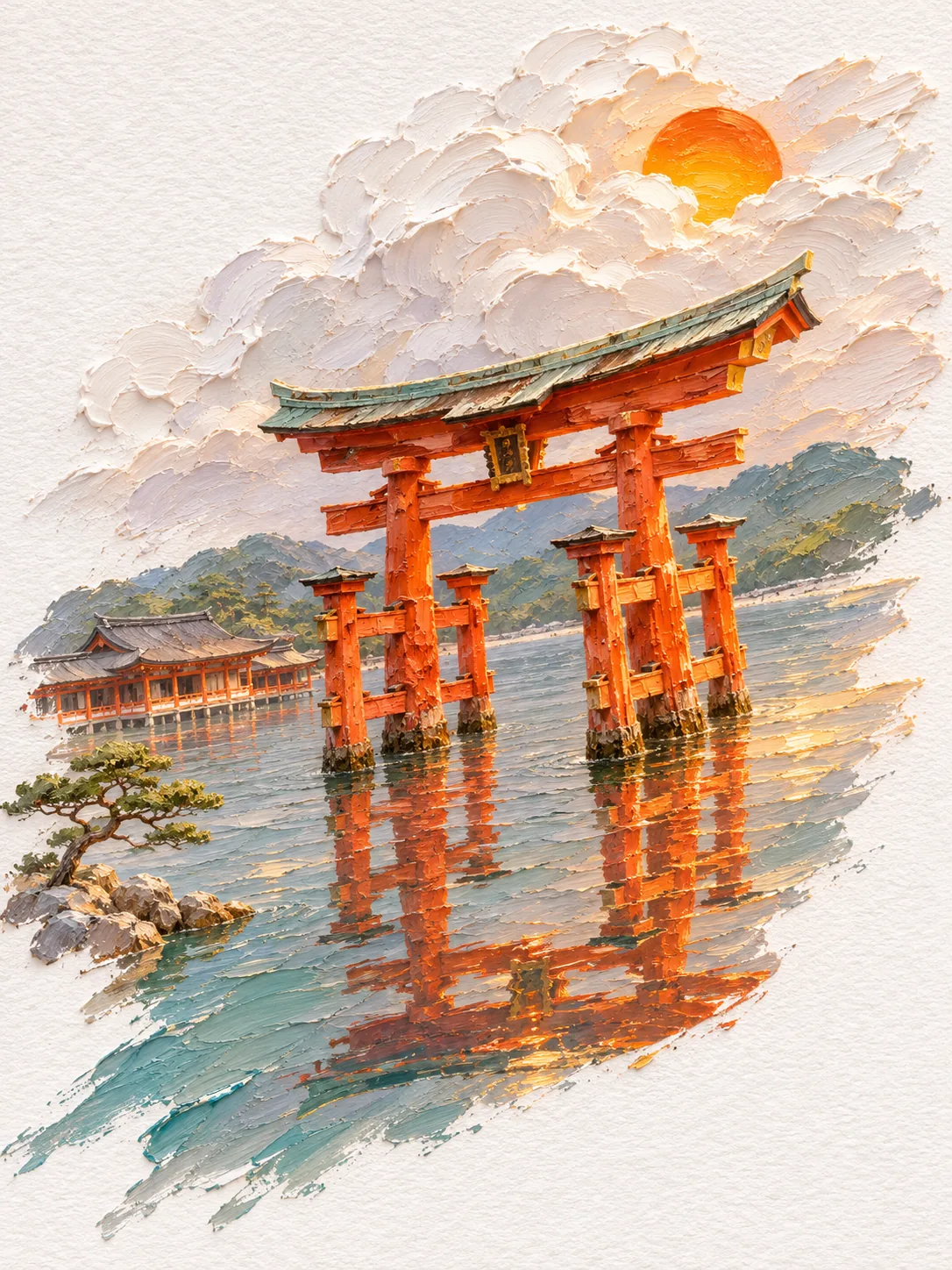
満潮の宮島、朱の大鳥居をナイフで描く。背後には水の上の社殿、紙の下へと長くのびる赤い倒影。
厳島神社の大鳥居は、宮島の沖、海の中に立っている。満潮になると水が柱のまわりまで満ち、社殿は浮かんでいるように見える。プロンプトはどの名所にも手前の水面を求めるが、ここではその水が海そのものだ。
絵の主な色は鳥居の朱。名所自身の色でパレットを決めるという、プロンプトのとおりだ。倒影がその朱を、青緑の絵具の帯へと運び下ろす。柱の上に建つ社殿は左に小さく、余白への書き込みのように置かれている。
このプロンプトはひな形で、街ごとに変わるのは角かっこの中の名前だけ。ここでは英訳を載せている。
[Miyajima · the great torii of Itsukushima Shrine], oil painting style, a 3D miniature landscape in thick palette-knife impasto, with paint of varying thickness giving a real sense of volume. 3:4 portrait, a centred diagonal composition. The main colour comes from the landmark's own signature colours, or from the colours people associate with the city. A sweep of oil paint in matching tones runs from the lower left to the upper right, carrying the finely made landmark and rendering its iconic outline, structure and materials accurately, with a few related elements dotted around it. The paint at the bottom and the water in front echo the building's main colour; the water clearly reflects the whole landmark, keeping natural glints and layers of colour. Behind the building, milky-white clouds are built up from thick oil paint, varied in size and overlapping front to back, with clearly raised thickness, palette-knife texture and soft cast shadows, and an orange-gold sun rises between them. About a 45-degree oblique view from above, soft side light, a minimal layout, large areas of white textured paper left blank, the edges of the paint showing natural scraped and broken strokes. No text, no watermark.