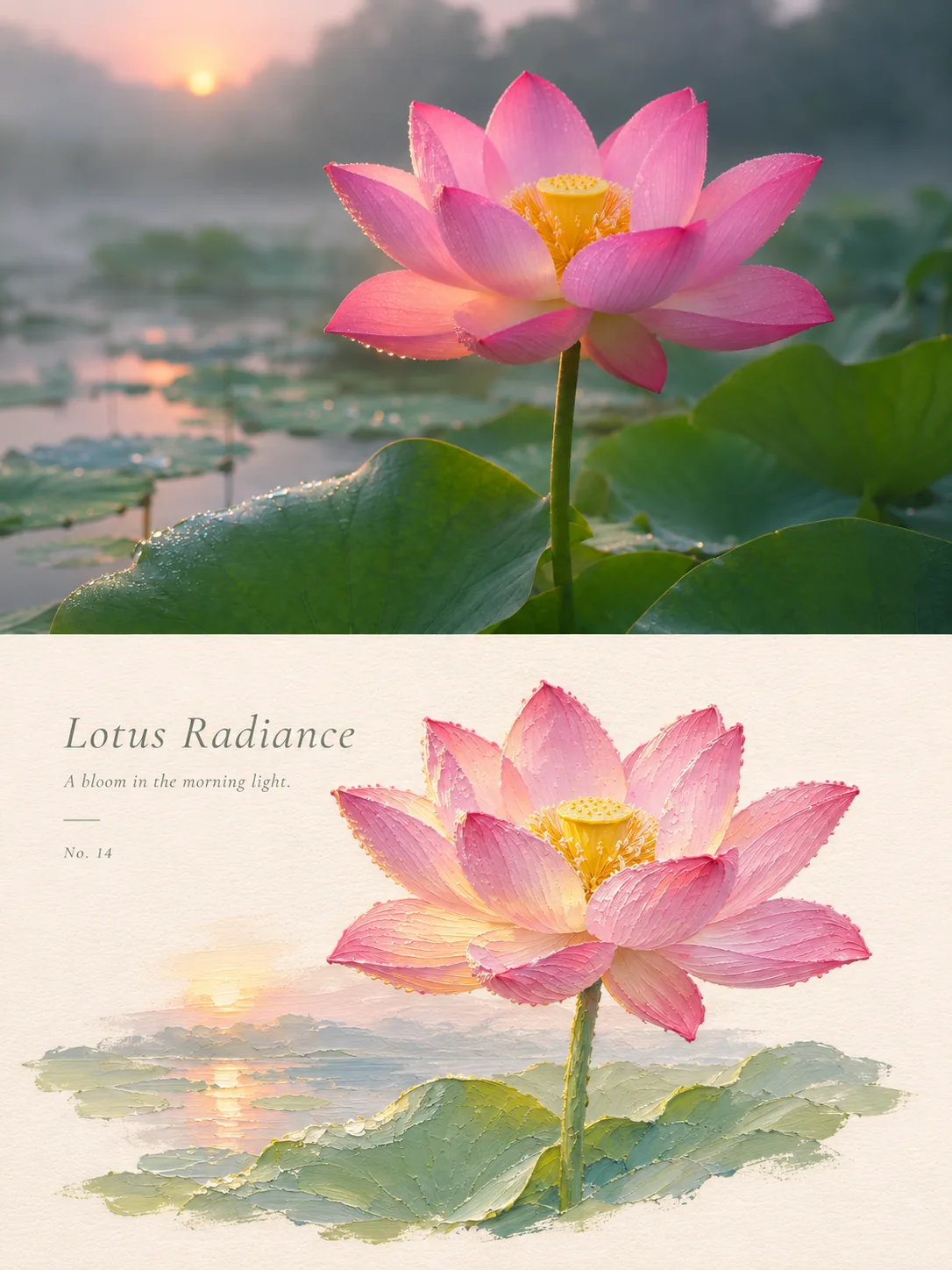
ふたつの半分 / 2026
蓮の輝き
夜明けの靄のかかった池に、葉の上に咲く一輪の桃色の蓮。絵の半分では花びらが一枚ずつ盛られ、朝日は茎の向こうの小さな光の筋になる。
花びらは一枚ずつ、縁に粒のような絵具をのせて盛られ、蓮の葉はプロンプトのいう色の帯になっている。
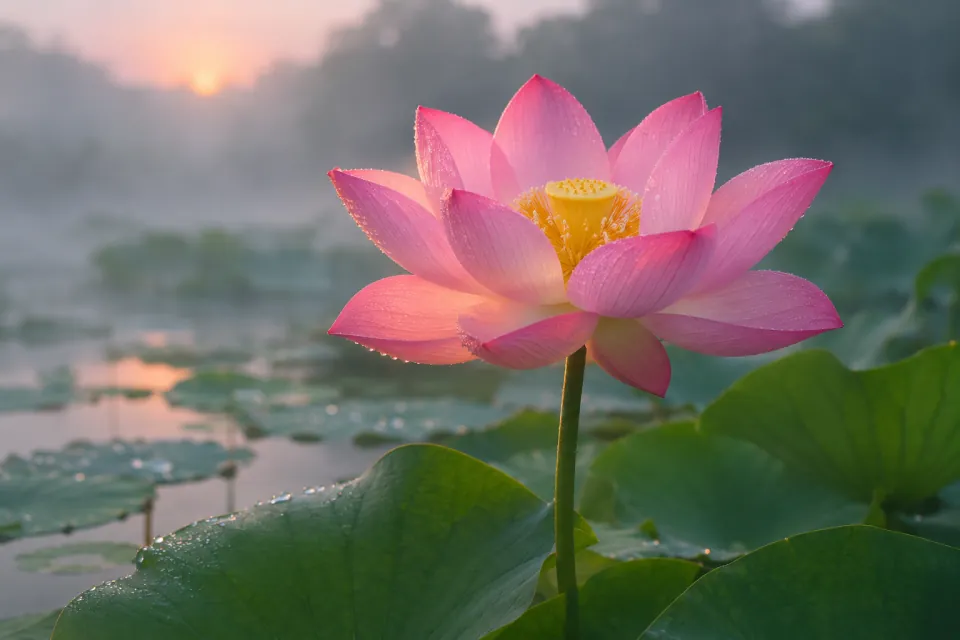
このポスターのプロンプトは、アップロードされた写真を前提にしている。でも写真はなかった。上の写真はまず次の説明から生成され、誰かが撮ったものであるかのようにプロンプトへ渡された。
3:2 landscape. One pink lotus flower, fully open, standing above round green lotus leaves in a still pond at dawn, thin mist over the water, soft cool light with a warm glow on the petals, a few drops of dew. Telephoto lens at the height of the flower, shallow depth of field. A real photograph, not an illustration. No people, no text, no logos, no watermark.
Lotus Radiance と A bloom in the morning light は、ポスター自身の言葉。ポスターのプロンプトは、ここでは英訳を載せている。
Impasto oil-painting miniature comparison poster Goal Turn each input photo into its own poster comparing photography and design; never combine photos. It works for people, animals, plants, architecture, objects and any kind of scene: follow what the original photo expresses, not a fixed theme. Format and layout A 3:4 portrait canvas, split strictly in half, top and bottom, 50% each. The top is the photography zone, the bottom the design zone; the two meet directly along a clean horizontal edge, with no gap, gradient, feathering or overlap. All design elements and text sit inside the bottom zone; add no extra title area. Photography zone Keep the original photo's real photographic texture, the subject's identity and number, outline, pose, proportions, key details, perspective, position, natural light and shadow and original colours, with only a light, refined colour grade. Secondary surroundings may be cropped or the background slightly extended, but never crop out, stretch, distort, mirror, duplicate, move or redraw the subject. No text, borders, paper texture or decoration in the photography zone. Design zone Take the subject, outline, pose and spatial relationships from the same photo and rebuild them as an impasto oil-painting miniature with a sculptural sense of volume, through layered paint, palette-knife texture, hand shaping and undulating edges, rather than a mechanical copy of the photo's detail. Place the subject in the centre or slightly off it, and keep large areas of warm white paper blank; support the subject with a band of colour taken from the original photo, which may become ground, water, a path or an abstract slice of space. A few reflections, glints of light, rain or mist, or trailing strokes may stay, but add nothing unrelated. Colour and material Draw the main colour, the secondary colours and the warm–cool relationships from the original photo, and reduce them to a harmonious, limited palette, keeping the subject's own colour character first rather than a fixed scheme. Raise the brightness and translucency of the design zone a little. Use the thickest paint for the colour band, the slices of setting and the highlights, and keep the subject finely structured; the paper shows a fine texture and a matte finish, never a plastic look. Text In the blank space of the design zone, place a short English title with one line of small subtitle; if needed, add a very small number or a tiny note. The type is thin and restrained, and may follow the subject's axis or the edge of the blank space. The text must come from what can be confirmed about the subject or the mood, spelled correctly; without reliable information, add no place names, dates, coordinates, brands, signatures, accounts or placeholders. Mood Quiet, restrained and refined, with the order and collectable feel of an art publication; build the layers through material, blank space, volume and the subject's relationships. Avoid Combining different photos, changing the subject, unrelated top and bottom scenes, an illustrated photography zone, cluttered decoration, extra title bars, garbled or repeated text, logos, signatures, watermarks, cartoon styles, saturated clashing colours, dull muddy colours, fluorescent colours, candy filters, glossy plastic 3D, cheap CG and crowded scenes.