パレットナイフの街 / 2026
白い紙に、白い絵具のタージ・マハル
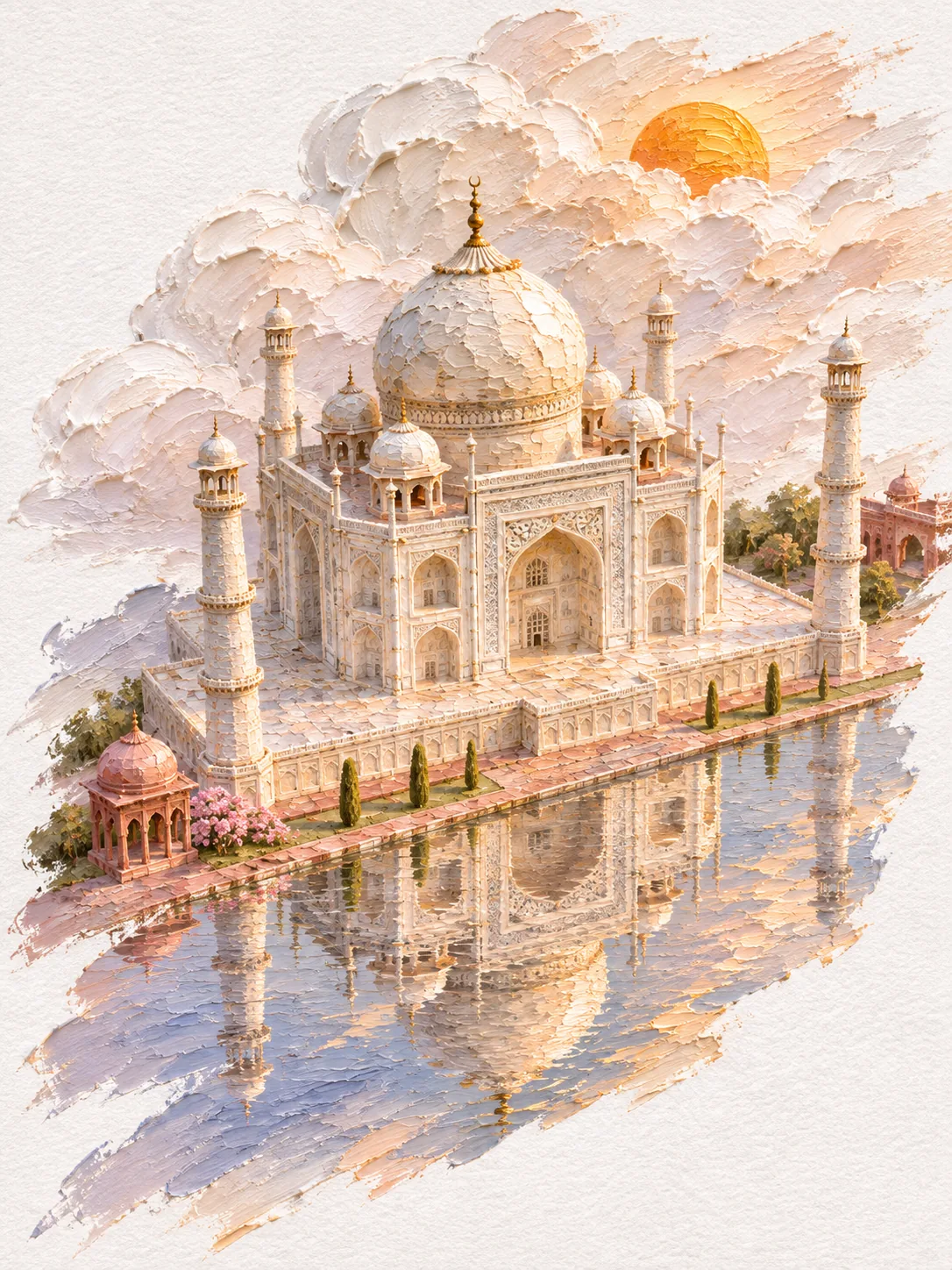
ここに並ぶ名所のなかで、紙とほとんど同じ色をしているのはタージ・マハルだけ。ナイフは白の起伏でそれを建て、雲間からのぼる太陽が温める。
プロンプトはどの名所も白い紙の大きな余白に置き、名所自身の色でパレットを導くよう求める。タージ・マハルでは、そのふたつがほとんど同じになる。白い紙に、白い大理石。絵は、残されたわずかな差で描かれている。ドームにあたる陽の温かさ、影の灰紫、端に置かれた赤砂岩の小亭。
形のほとんどは、色ではなくナイフが運んでいる。ドームは重なり合う鱗のような絵具で、ミナレットは起伏のある白を積み上げて建てられている。
このプロンプトはひな形で、街ごとに変わるのは角かっこの中の名前だけ。ここでは英訳を載せている。
[Agra · the Taj Mahal], oil painting style, a 3D miniature landscape in thick palette-knife impasto, with paint of varying thickness giving a real sense of volume. 3:4 portrait, a centred diagonal composition. The main colour comes from the landmark's own signature colours, or from the colours people associate with the city. A sweep of oil paint in matching tones runs from the lower left to the upper right, carrying the finely made landmark and rendering its iconic outline, structure and materials accurately, with a few related elements dotted around it. The paint at the bottom and the water in front echo the building's main colour; the water clearly reflects the whole landmark, keeping natural glints and layers of colour. Behind the building, milky-white clouds are built up from thick oil paint, varied in size and overlapping front to back, with clearly raised thickness, palette-knife texture and soft cast shadows, and an orange-gold sun rises between them. About a 45-degree oblique view from above, soft side light, a minimal layout, large areas of white textured paper left blank, the edges of the paint showing natural scraped and broken strokes. No text, no watermark.